
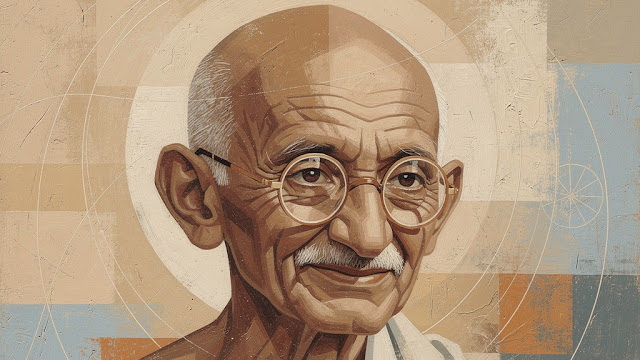
“You must not lose faith in humanity. Humanity is an ocean; if a few drops of the ocean are dirty, the ocean does not become dirty.” – Mahatma Gandhi.
“인류에 대한 신뢰를 잃어서는 안된다. 인류는 대양과도 같은 것이다. 몇 방울이 오염되었다고 해서 바다 전체가 오염되는 것은 아니다.” – 마하트마 간디.
Mahatma Gandhi – “You Must Not Lose Faith in Humanity. Humanity Is an Ocean; If a Few Drops of the Ocean Are Dirty, the Ocean Does Not Become Dirty.”
Mohandas Karamchand Gandhi, honorifically known as Mahatma (meaning “great soul”), was an Indian lawyer, anti-colonial nationalist, and political ethicist who led India to independence through nonviolent resistance. Born in Porbandar, India in 1869, he studied law in London before spending 21 years in South Africa, where he first developed his philosophy of Satyagraha — nonviolent civil disobedience. Returning to India in 1915, he became the leader of the Indian independence movement, organizing peaceful protests, hunger strikes, and mass civil disobedience campaigns against British colonial rule. His methods inspired civil rights movements worldwide, influencing leaders like Martin Luther King Jr. and Nelson Mandela. Gandhi lived simply, wore traditional Indian clothing, and advocated for religious harmony and the upliftment of the untouchable caste. He was assassinated in 1948, just months after India achieved independence, but his legacy of peaceful resistance and moral courage continues to inspire humanity.
모한다스 카람찬드 간디는 “위대한 영혼”을 의미하는 마하트마라는 존칭으로 알려진 인도의 변호사, 반식민지 민족주의자, 정치 윤리학자로서 비폭력 저항을 통해 인도를 독립으로 이끌었습니다. 1869년 인도 포르반다르에서 태어난 그는 런던에서 법학을 공부한 후 남아프리카에서 21년을 보냈으며, 그곳에서 처음으로 사티아그라하 — 비폭력 시민 불복종 — 의 철학을 발전시켰습니다. 1915년 인도로 돌아온 후 인도 독립 운동의 지도자가 되어 영국 식민 통치에 맞서 평화적 시위, 단식 투쟁, 대규모 시민 불복종 운동을 조직했습니다. 그의 방법은 마틴 루터 킹 주니어와 넬슨 만델라 같은 지도자들에게 영향을 미치며 전 세계 시민권 운동에 영감을 주었습니다. 간디는 검소하게 살았고, 전통 인도 의복을 입었으며, 종교적 화합과 불가촉천민 계급의 향상을 옹호했습니다. 인도가 독립을 얻은 지 불과 몇 달 후인 1948년 암살당했지만, 평화적 저항과 도덕적 용기의 그의 유산은 계속해서 인류에게 영감을 주고 있습니다.

The Ocean Metaphor: Seeing the Bigger Picture
Gandhi’s beautiful metaphor reminds us to maintain perspective when confronted with human cruelty and failure. It is easy to become cynical when we witness violence, corruption, greed, and hatred — whether in daily news or personal experience. These dark moments can make humanity seem fundamentally flawed and beyond redemption. But Gandhi offers a corrective lens: these negative acts are drops, not the entire ocean. The vast majority of human interactions involve kindness, cooperation, love, and ordinary decency that rarely makes headlines. When we focus exclusively on humanity’s failures, we distort reality and lose sight of the immense goodness that sustains civilization every single day.
간디의 아름다운 은유는 인간의 잔인함과 실패에 직면했을 때 관점을 유지하라고 상기시켜 줍니다. 폭력, 부패, 탐욕, 증오를 목격할 때 — 일상 뉴스에서든 개인적 경험에서든 — 냉소적이 되기 쉽습니다. 이러한 어두운 순간들은 인류가 근본적으로 결함이 있고 구원받을 수 없는 것처럼 보이게 할 수 있습니다. 하지만 간디는 교정하는 렌즈를 제공합니다: 이러한 부정적인 행동들은 물방울이지 전체 바다가 아닙니다. 인간 상호작용의 대다수는 좀처럼 헤드라인을 장식하지 않는 친절, 협력, 사랑, 평범한 품위를 포함합니다. 인류의 실패에만 집중하면 현실을 왜곡하고 매일 문명을 유지하는 엄청난 선함을 놓치게 됩니다.

Why Faith in Humanity Matters
Maintaining faith in humanity is not naive optimism — it is a practical necessity for meaningful action. When we believe people are fundamentally corrupt, we justify withdrawal, selfishness, and despair. Why help others if everyone is irredeemably bad? Why work for change if human nature is permanently dark? Gandhi understood that cynicism paralyzes while faith empowers. His entire strategy of nonviolent resistance depended on believing that even oppressors could be awakened to their humanity through moral appeal. If he had lost faith, India’s independence movement would have collapsed into violence or apathy. Faith in humanity enables us to keep working for a better world despite evidence of evil, knowing that goodness ultimately outweighs darkness.
인류에 대한 믿음을 유지하는 것은 순진한 낙관주의가 아닙니다 — 그것은 의미 있는 행동을 위한 실용적 필수입니다. 사람들이 근본적으로 부패했다고 믿으면, 우리는 철수, 이기심, 절망을 정당화합니다. 모든 사람이 구제불능으로 나쁘다면 왜 다른 사람을 도울까요? 인간 본성이 영구적으로 어둡다면 왜 변화를 위해 일할까요? 간디는 냉소주의가 마비시키는 반면 믿음은 힘을 준다는 것을 이해했습니다. 그의 비폭력 저항 전략 전체는 억압자들조차도 도덕적 호소를 통해 인간성에 깨어날 수 있다는 믿음에 의존했습니다. 만약 그가 믿음을 잃었다면 인도 독립 운동은 폭력이나 무관심으로 붕괴되었을 것입니다. 인류에 대한 믿음은 선함이 궁극적으로 어둠을 능가한다는 것을 알면서도 악의 증거에도 불구하고 더 나은 세상을 위해 계속 일할 수 있게 해줍니다.

Choosing Hope in Difficult Times
Gandhi’s words speak directly to our current moment of global challenges, political division, and social media feeds filled with humanity’s worst moments. It is tempting to retreat into tribalism or nihilism. But Gandhi calls us to a higher response: to see the dirty drops without believing they define the ocean. This requires conscious effort — seeking out stories of human courage and compassion, remembering acts of kindness in our own lives, and recognizing that for every cruel act, millions of decent ones go unnoticed. You must not lose faith in humanity, because losing that faith means abandoning the possibility of progress. The ocean remains vast and fundamentally clean. Choose to see it clearly.
간디의 말은 글로벌 도전, 정치적 분열, 인류의 최악의 순간으로 가득 찬 소셜 미디어 피드의 현재 순간에 직접적으로 말합니다. 부족주의나 허무주의로 후퇴하고 싶은 유혹이 있습니다. 하지만 간디는 우리에게 더 높은 반응을 요청합니다: 더러운 물방울이 바다를 정의한다고 믿지 않으면서 그것들을 보는 것입니다. 이것은 의식적인 노력을 필요로 합니다 — 인간의 용기와 연민의 이야기를 찾고, 우리 자신의 삶에서 친절한 행동을 기억하며, 모든 잔인한 행동에 대해 수백만 개의 품위 있는 행동이 주목받지 못한다는 것을 인식하는 것입니다. 인류에 대한 믿음을 잃어서는 안 됩니다, 그 믿음을 잃는 것은 진보의 가능성을 포기하는 것을 의미하기 때문입니다. 바다는 여전히 광대하고 근본적으로 깨끗합니다. 그것을 명확히 보기로 선택하세요.