
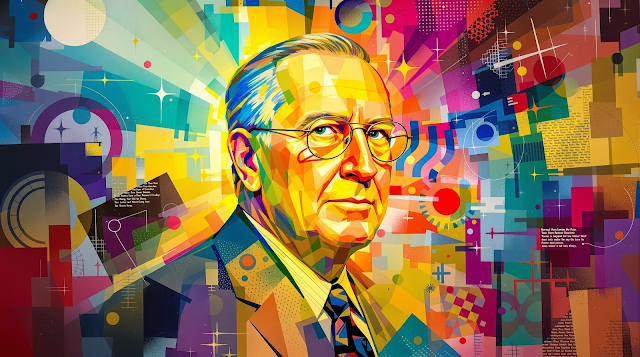
“Change your thoughts and you change your world.” – Norman Vincent Peale.
“생각을 바꾸면 세상이 바뀐다.” – 노먼 빈센트 필.
The Power of Positive Thinking
Norman Vincent Peale (1898-1993) was an American minister, author, and a progenitor of the positive thinking movement. As pastor of Marble Collegiate Church in New York City for 52 years, Peale reached millions through his sermons, radio programs, and writings. His most influential work, “The Power of Positive Thinking,” published in 1952, remained on The New York Times bestseller list for 186 consecutive weeks and has sold over 5 million copies. Peale’s philosophy combined Christian principles with psychology to create a practical approach to overcoming obstacles and achieving personal success through optimistic thought patterns.
노먼 빈센트 필(1898-1993)은 미국의 목사, 작가, 그리고 긍정적 사고 운동의 선구자였습니다. 뉴욕시 마블 칼리지에이트 교회의 목사로 52년 동안 재직하면서, 필은 설교, 라디오 프로그램, 그리고 저술을 통해 수백만 명에게 영향을 미쳤습니다. 1952년에 출판된 그의 가장 영향력 있는 작품인 “긍정적 사고의 힘”은 뉴욕 타임스 베스트셀러 목록에 186주 연속으로 머물렀으며 500만 부 이상 판매되었습니다. 필의 철학은 기독교 원칙과 심리학을 결합하여 낙관적인 사고 패턴을 통해 장애물을 극복하고 개인적 성공을 달성하기 위한 실용적인 접근법을 만들었습니다.

The Profound Wisdom in Peale’s Quote
“Change your thoughts and you change your world.” This simple yet profound statement encapsulates the core of Norman Vincent Peale’s philosophy. The quote suggests that our perception of reality is shaped by our internal thought patterns, and by consciously altering these patterns, we can transform our external experiences. This perspective aligns with modern psychological concepts like cognitive behavioral therapy, which recognizes the powerful connection between thoughts, emotions, and behaviors. Peale’s insight wasn’t merely theoretical—he provided practical techniques for thought transformation, including visualization, affirmation, and prayer, that millions have used to overcome challenges ranging from anxiety to career setbacks.
“당신의 생각을 바꾸면 당신의 세계가 바뀝니다.” 이 간단하지만 심오한 문장은 노먼 빈센트 필 철학의 핵심을 담고 있습니다. 이 인용문은 우리의 현실 인식이 내부 사고 패턴에 의해 형성되며, 이러한 패턴을 의식적으로 변경함으로써 외부 경험을 변화시킬 수 있다고 제안합니다. 이러한 관점은 생각, 감정, 행동 사이의 강력한 연결을 인식하는 인지 행동 치료와 같은 현대 심리학적 개념과 일치합니다. 필의 통찰력은 단순히 이론적인 것이 아니었습니다—그는 수백만 명이 불안에서부터 직업적 좌절에 이르는 다양한 도전을 극복하는 데 사용한 시각화, 확언, 기도와 같은 사고 변환을 위한 실용적인 기술을 제공했습니다.
Scientific Support for Peale’s Philosophy
While some critics dismissed Peale’s ideas as simplistic, modern neuroscience has validated many aspects of his approach. Research on neuroplasticity demonstrates that our thought patterns create neural pathways in the brain that strengthen with repetition. Positive psychology studies show that optimistic thinking styles correlate with better health outcomes, greater resilience, and higher achievement. The practice of mindfulness—becoming aware of and redirecting negative thought patterns—has gained scientific credibility as an effective intervention for various psychological challenges. These scientific developments suggest that Peale’s intuitive understanding of the mind-reality connection was ahead of its time.
일부 비평가들이 필의 아이디어를 단순하다고 일축했지만, 현대 신경과학은 그의 접근법의 많은 측면을 검증했습니다. 신경 가소성에 관한 연구는 우리의 사고 패턴이 반복으로 강화되는 뇌의 신경 경로를 만든다는 것을 보여줍니다. 긍정 심리학 연구는 낙관적인 사고 스타일이 더 나은 건강 결과, 더 큰 회복력, 그리고 더 높은 성취와 상관관계가 있음을 보여줍니다. 마음챙김의 실천—부정적인 사고 패턴을 인식하고 재지시하는 것—은 다양한 심리적 도전에 효과적인 개입으로서 과학적 신뢰성을 얻었습니다. 이러한 과학적 발전은 마음-현실 연결에 대한 필의 직관적 이해가 시대를 앞서 있었음을 시사합니다.

Practical Applications for Daily Life
The beauty of Peale’s philosophy lies in its practicality. His quote invites us to take an active role in shaping our experience through conscious thought management. In daily life, this might mean reframing challenges as opportunities, practicing gratitude to shift focus from what’s lacking to what’s abundant, or using positive affirmations to counter self-defeating thought patterns. Business leaders apply these principles by cultivating optimistic organizational cultures that encourage innovation and resilience. Educators use positive thinking techniques to help students develop growth mindsets. The versatility of Peale’s approach allows it to be adapted across contexts, making it a powerful tool for personal and professional development.
필 철학의 아름다움은 그 실용성에 있습니다. 그의 인용문은 우리가 의식적인 사고 관리를 통해 우리의 경험을 형성하는 데 적극적인 역할을 하도록 초대합니다. 일상 생활에서, 이것은 도전을 기회로 재구성하거나, 부족한 것에서 풍부한 것으로 초점을 옮기기 위해 감사를 실천하거나, 자기 패배적 사고 패턴을 대항하기 위해 긍정적인 확언을 사용하는 것을 의미할 수 있습니다. 비즈니스 리더들은 혁신과 회복력을 장려하는 낙관적인 조직 문화를 육성함으로써 이러한 원칙을 적용합니다. 교육자들은 학생들이 성장 마인드셋을 개발하도록 돕기 위해 긍정적 사고 기법을 사용합니다. 필의 접근법의 다양성은 그것이 맥락 전반에 걸쳐 적응될 수 있게 하여, 개인적 및 전문적 발전을 위한 강력한 도구로 만듭니다.
The Legacy of Positive Thinking
Norman Vincent Peale’s influence extends far beyond his lifetime. His work helped launch the modern self-help movement and influenced countless motivational speakers and authors. The principles he championed have been incorporated into various therapeutic approaches, leadership philosophies, and educational methodologies. While some contemporary approaches have refined his techniques with greater psychological nuance, the fundamental insight captured in “Change your thoughts and you change your world” remains powerfully relevant. In an era of increasing mental health challenges, Peale’s emphasis on taking control of one’s thought life offers an empowering message: we may not control all external circumstances, but we can transform our experience by changing how we think about them.
노먼 빈센트 필의 영향력은 그의 생애를 훨씬 넘어섭니다. 그의 작업은 현대 자기계발 운동을 시작하는 데 도움을 주었고 수많은 동기부여 연사와 작가들에게 영향을 미쳤습니다. 그가 옹호한 원칙들은 다양한 치료적 접근법, 리더십 철학, 그리고 교육 방법론에 통합되었습니다. 일부 현대적 접근법들이 그의 기술을 더 큰 심리적 뉘앙스로 정제했지만, “당신의 생각을 바꾸면 당신의 세계가 바뀝니다”에 담긴 근본적인 통찰력은 강력하게 관련성을 유지합니다. 정신 건강 도전이 증가하는 시대에, 자신의 사고 생활을 통제하는 것에 대한 필의 강조는 힘을 실어주는 메시지를 제공합니다: 우리는 모든 외부 환경을 통제할 수 없을지 모르지만, 그것들에 대해 생각하는 방식을 바꿈으로써 우리의 경험을 변화시킬 수 있습니다.
